
November 28, 2026
HVAC Monitoring for Malaysian Buildings: A Practical Pilot Checklist

Bahasa Melayu
Pemantauan HVAC untuk Bangunan Malaysia: Senarai Semak Rintis
Mulakan dengan masalah operasi
Bangunan komersial boleh memantau penyaman udara untuk memahami jadual, aduan keselesaan atau tingkah laku peralatan luar biasa. Mulakan dengan persoalan jelas, peralatan terlibat dan pemilik tindakan. Sensor dan papan pemuka menyokong siasatan; ia tidak menggantikan penyelenggaraan atau membuktikan penjimatan tenaga.
Petakan peralatan
Kenal pasti unit pengendalian udara, chiller, pam atau peralatan lain dalam rintis. Rekod waktu operasi, kawalan, sejarah servis dan ruang yang diservis. Sahkan sempadan bersama petugas fasiliti dan catat peralatan yang dikongsi antara zon. Bacaan satu komponen tidak mewakili seluruh sistem.
Pilih ukuran berguna
Mengikut persoalan, pasukan layak boleh mempertimbangkan suhu, status operasi, penggunaan elektrik atau ukuran lain yang sesuai. Pilih instrumen dengan julat dan ketepatan bersesuaian. Semak lokasi, pemasangan dan kawalan sedia ada sebelum membeli. Banyak nilai tidak berguna jika tiada siapa memahami maksudnya.
Wujudkan garis dasar
Rekod operasi wakil semasa ruang digunakan dan kosong, termasuk jadual, penggunaan ruang, cuaca jika berkaitan serta penyelenggaraan atau kerosakan diketahui. Bandingkan keadaan setara; perubahan penggunaan mungkin disebabkan waktu operasi lebih panjang, bukan perubahan kecekapan. Simpan bacaan asal dan tandakan anggaran atau data hilang.
Rancang lokasi dan keselamatan
Minta pihak layak menilai pemasangan selamat dan keserasian. Jangan ganggu kawalan perlindungan, litar elektrik atau sistem bertekanan. Sahkan akses penyelenggaraan, kuasa dan liputan rangkaian. Semak kalibrasi dan bandingkan sampel bacaan dengan instrumen rujukan sesuai jika praktikal.
Reka amaran yang boleh ditindak
Persetujui keadaan yang memerlukan perhatian, penerima dan eskalasi. Ambang perlu mengambil kira mod peralatan dan jadual bangunan. Rekod amaran palsu atau lewat semasa rintis dan laraskan bersama pemilik peralatan. Bacaan tinggi ialah sebab untuk menyiasat, bukan bukti kerosakan tertentu.
Uji sambungan dan data
Dokumentasikan get laluan, komunikasi, akses dibenarkan dan tanggungjawab pembekal. Uji gangguan dan pemulihan, termasuk penandaan bacaan hilang dan cap masa data tersimpan. Gunakan akses mengikut peranan jika tersedia, selenggara perisian tegar dan tarik balik akses pembekal apabila tidak diperlukan. Simpan inventori dan hubungan sokongan.
Hubungkan dengan penyelenggaraan
Apabila pengecualian berlaku, rekod peralatan, masa, bacaan, siasatan dan hasil. Juruteknik mungkin perlu memeriksa jadual kawalan, sensor atau operasi sebelum membaiki. Jabatan Tenaga Amerika Syarikat menerangkan pentauliahan sebagai pengesahan operasi HVAC mengikut reka bentuk dan kriteria kejuruteraan; pemantauan sahaja bukan pentauliahan.
Kira kos kitar hayat
Bandingkan kos sensor, pemasangan, sambungan, perisian, kalibrasi, servis, alat ganti dan masa kakitangan. Tanya tentang eksport data, tamat langganan dan pemilikan rekod. Jangan jamin pulangan atau penjimatan tanpa garis dasar, kaedah dan pengesahan sesuai. Sahkan skop dan terma semasa sebelum perolehan.
Persetujui penerimaan
Pilih satu kumpulan peralatan atau zon dan tetapkan sela ukuran, kelengkapan data, laluan amaran serta tempoh semakan. Uji demonstrasi selamat, gangguan dan kitaran operasi biasa. Minta pasukan fasiliti menerangkan siasatan amaran. Semak kualiti data, penyelenggaraan dan isu tertunda sebelum peluasan.
Serahan dan langkah seterusnya
Berikan senarai sensor, lokasi, tetapan, pemilik akses, hubungan sokongan dan prosedur respons ringkas. Simpan rekod di lokasi diluluskan tanpa kata laluan dalam hamparan bersama. Nilai semula ambang apabila jadual atau peralatan berubah. Hubungi FXIT berdasarkan keperluan dan sahkan dokumentasi serta skop semasa.
Soalan lazim
Bolehkah satu sensor mendiagnosis semua kerosakan HVAC? Tidak; ia bergantung pada lokasi, ukuran dan siasatan. Adakah bil elektrik lebih rendah membuktikan kecekapan? Tidak tanpa perbandingan dan kaedah sesuai. Bolehkah pemantauan menggantikan penyelenggaraan layak? Tidak. Gunakan rintis untuk membina bukti dan proses respons yang boleh dilaksanakan.
Semak tempoh laporan pertama
Pada akhir tempoh lengkap pertama, jejak sampel carta kepada bacaan asal. Semak cap masa, unit dan ID peralatan. Semak jurang bersama pembekal dan tetapkan tarikh penyelesaian. Bandingkan log respons dengan amaran dihantar supaya notifikasi terlepas kelihatan.
Bersedia untuk perubahan
Jika peralatan, waktu operasi atau penggunaan ruang berubah, rekod tarikh sebelum membandingkan hasil. Pastikan petugas kedua dibenarkan boleh mengakses arahan apabila pemilik tiada. Persetujui penyelenggaraan dan cara mendapatkan data jika sokongan berubah. Uji semula penerimaan selepas perubahan besar.
简体中文
马来西亚建筑 HVAC 监测:实用试点清单
从运行问题开始
商业建筑可以监测空调设备,以了解运行时间、舒适度投诉或异常设备行为。先明确问题、涉及设备及负责行动的人员。传感器和仪表板支持调查,不能代替维护,也不能单独证明节能。
梳理设备
确定试点范围内的空气处理机组、冷水机、泵或其他设备,记录运行时间、控制方式、维护历史及服务区域。与设施人员确认边界,标明跨区域共享的设备。单个组件读数不能代表整个系统。
选择有用的测量
合格团队可根据问题考虑温度、运行状态、用电量或其他适当测量。选择量程及精度符合用途的仪器。采购前检查位置、安装方式及现有控制;如果无人能解释读数,显示更多数值也没有意义。
建立基线
记录有人和无人时的代表性运行,包含日程、使用人数、相关天气及已知维护或故障。应比较相同条件;用电变化可能来自运行时间延长,而不是效率变化。保留原始读数并标记估算和缺失数据。
规划安装与安全
请合格人员评估安全安装和设备兼容性。不要干扰保护控制、电路或承压系统。确认维护通道、供电和网络覆盖,检查校准要求,并在可行时用合适的参考仪器核对部分读数。
设计可行动报警
约定哪些情况需要关注、谁接收报警以及如何升级。阈值应反映设备工况及建筑日程。试点期间记录误报和延迟,与设备负责人调整设置。读数偏高是调查原因,不证明特定故障。
测试连接和数据质量
记录网关、通信路径、允许访问及供应商责任。测试断网和恢复,包括是否标记缺失读数以及缓存数据是否保留时间戳。可用时按角色授权,维护固件,不再需要时撤销供应商访问,并保存设备清单及支持联系人。
联系维护流程
出现异常时记录设备、时间、读数、调查及结果。决定维修前,技术人员可能需要检查控制日程、传感器状态或设备运行。美国能源部将 HVAC 调试描述为验证系统按设计和工程标准运行;监测可支持审查,但本身不等于调试。
计算全生命周期成本
比较传感器、安装、连接、软件、校准、维护、备件和人员时间。询问历史数据导出、订阅结束后的处理及记录所有权。没有适当基线、方法和验证时,不要承诺固定回报或节省。采购前核实当前服务范围和条款。
扩展前约定验收
选择一组设备或一个区域,明确测量间隔、数据完整率、报警路径和审查期。测试安全演示、断网和正常运行周期,并请设施团队说明如何调查报警。扩展前审查数据质量、维护工作及未解决问题。
交接与下一步
提供传感器清单、位置、设置、访问负责人、支持联系人及简明响应流程。将记录保存在批准位置,不在共享表格保存密码。日程或设备变化时重新评估阈值。可向 FXIT 说明需求,并核实相关产品文档及当前服务范围。
常见问题
一个传感器能诊断所有 HVAC 故障吗?不能,取决于位置、测量和调查。月度电费降低能证明效率提高吗?没有适当比较和方法不能。监测能代替合格维护吗?不能。应通过试点建立可靠证据及可执行的响应流程。
审查首个报告期
试点首个完整周期结束时,将样本图表追溯至原始读数,核实时间戳、单位和设备编号。与供应商审查数据缺口并设定解决日期,将响应记录与发送的报警比较,识别遗漏通知。
为变化做准备
设备、运行时间或使用人数变化时,应在比较结果前记录生效日期。确保负责人不在时第二名授权人员可访问说明。约定系统维护及支持变化时的数据取回方式,重大变化后重复验收测试。
English
HVAC Monitoring for Malaysian Buildings: A Practical Pilot Checklist
Start with an operating problem
Commercial buildings may monitor air-conditioning equipment to understand operating schedules, comfort complaints or unusual equipment behaviour. Begin with a clear question, the affected equipment and the person responsible for acting on the findings. Sensors and dashboards support investigation; they do not replace maintenance or establish energy savings by themselves.
Map the equipment
Identify the air-handling units, chillers, pumps or other equipment included in the pilot. Record operating hours, control arrangements, service history and the spaces served. Confirm the boundaries with facilities staff and note whether equipment is shared across zones. A reading from one component does not describe the entire system.
Select useful measurements
Depending on the question, a qualified team may consider temperature, operating status, electrical consumption or other suitable measurements. Select instruments with the range and accuracy appropriate to the intended use. Check the location, installation method and existing controls before purchasing. A dashboard showing many values is not useful if nobody can explain what they mean.
Establish a baseline
Record representative operation during occupied and unoccupied periods. Include the schedule, occupancy, weather conditions where relevant, and known maintenance or equipment faults. Compare like with like; a change in consumption could reflect longer operating hours rather than a change in efficiency. Preserve original readings and clearly mark estimates or missing data.
Plan sensor placement and safety
Ask qualified personnel to assess safe installation and compatibility with existing equipment. Do not interfere with protective controls, electrical circuits or pressurised systems. Confirm sensor access for maintenance, power supply and network coverage. Check calibration requirements and compare a sample of measurements against an appropriate reference instrument when practical.
Design actionable alerts
Agree which conditions require attention, who receives an alert and how it is escalated. Thresholds should reflect the equipment’s operating mode and the building’s schedule. During the pilot, record false alarms and delayed notifications, then adjust settings with the equipment owner. A high reading is a reason to investigate, not proof of a particular fault.
Test connectivity and data quality
Document the gateway, communication path, permitted access and supplier responsibilities. Test an outage and recovery, including whether missing readings are identified and buffered data keeps its timestamps. Use role-based access where available, maintain firmware and remove supplier access when it is no longer needed. Keep a device inventory and support contacts.
Link monitoring to maintenance
When an exception appears, record the equipment, time, relevant reading, investigation and outcome. A technician may need to check the control schedule, sensor condition or equipment operation before deciding on a repair. The US Department of Energy describes commissioning as verification that HVAC systems operate according to design and engineering criteria; monitoring can support review but does not by itself constitute commissioning.
Calculate lifecycle cost
Compare sensors, installation, connectivity, software, calibration, servicing, replacement parts and staff time. Ask whether historical data can be exported, what happens if a subscription ends and who owns the records. Do not promise a fixed return or savings without an appropriate baseline, method and verification. Confirm current service scope and terms before procuring.
Agree acceptance before scaling
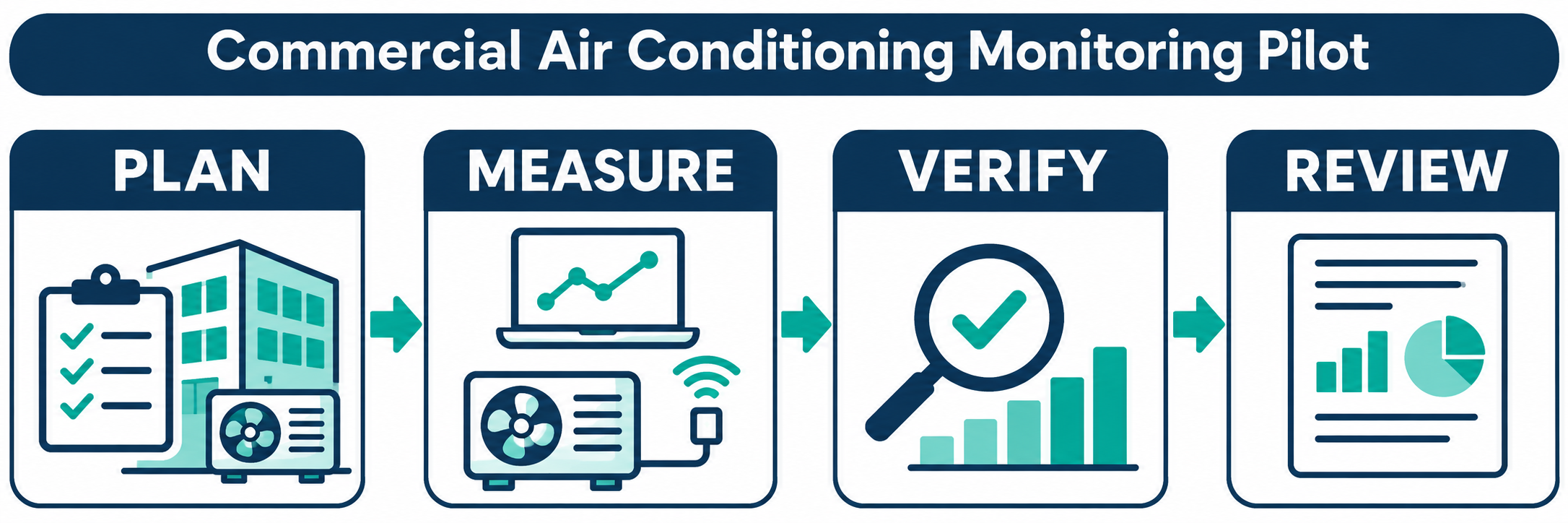
Select one equipment group or zone and define the measurement interval, data completeness, alert route and review period. Test a safe demonstration, an outage and an ordinary operating cycle. Ask the facilities team to explain how it would investigate an alert. Review data quality, maintenance effort and unresolved issues before adding more equipment.
Handover and next steps
Provide the sensor list, locations, settings, access owners, support contacts and a simple response procedure. Store the records in an approved location without putting passwords in a shared spreadsheet. Reassess thresholds when operating schedules or equipment change. Contact FXIT with your requirements and verify the relevant product documentation and service scope.
Common questions
Can one sensor diagnose every HVAC fault? No; the answer depends on placement, measurement and investigation. Does a lower monthly electricity bill prove an efficiency improvement? Not without a suitable comparison and method. Can monitoring replace qualified maintenance? No. Use the pilot to establish dependable evidence and an achievable response process.
Review the first reporting period
At the end of the pilot’s first complete period, trace a sample chart back to the original readings. Ask whether the timestamp, units and equipment identification are correct. Review gaps with the responsible supplier and set a date for resolving each issue. Compare the response log with the alerts sent so that missed notifications are visible.
Prepare for changes
If equipment, operating hours or occupancy change, record the effective date before comparing results. Ensure a second authorised person can access the instructions when the primary owner is away. Agree how the system will be maintained and how data will be retrieved if the support arrangement changes. Retest the agreed acceptance steps after significant changes.
Source checked 28 November 2026: US Department of Energy: HVAC Commissioning.