November 12, 2026
Smart Building IoT Procurement in Malaysia: A Practical Buyer Checklist
Bahasa Melayu — Baca artikel penuh
Mulakan dengan hasil
Tentukan masalah bangunan, lokasi, ukuran, pemilik tindakan dan keputusan yang disokong. Papan pemuka tidak menjamin penjimatan. Tetapkan perintis dan garis asas sebelum membuat tuntutan hasil.
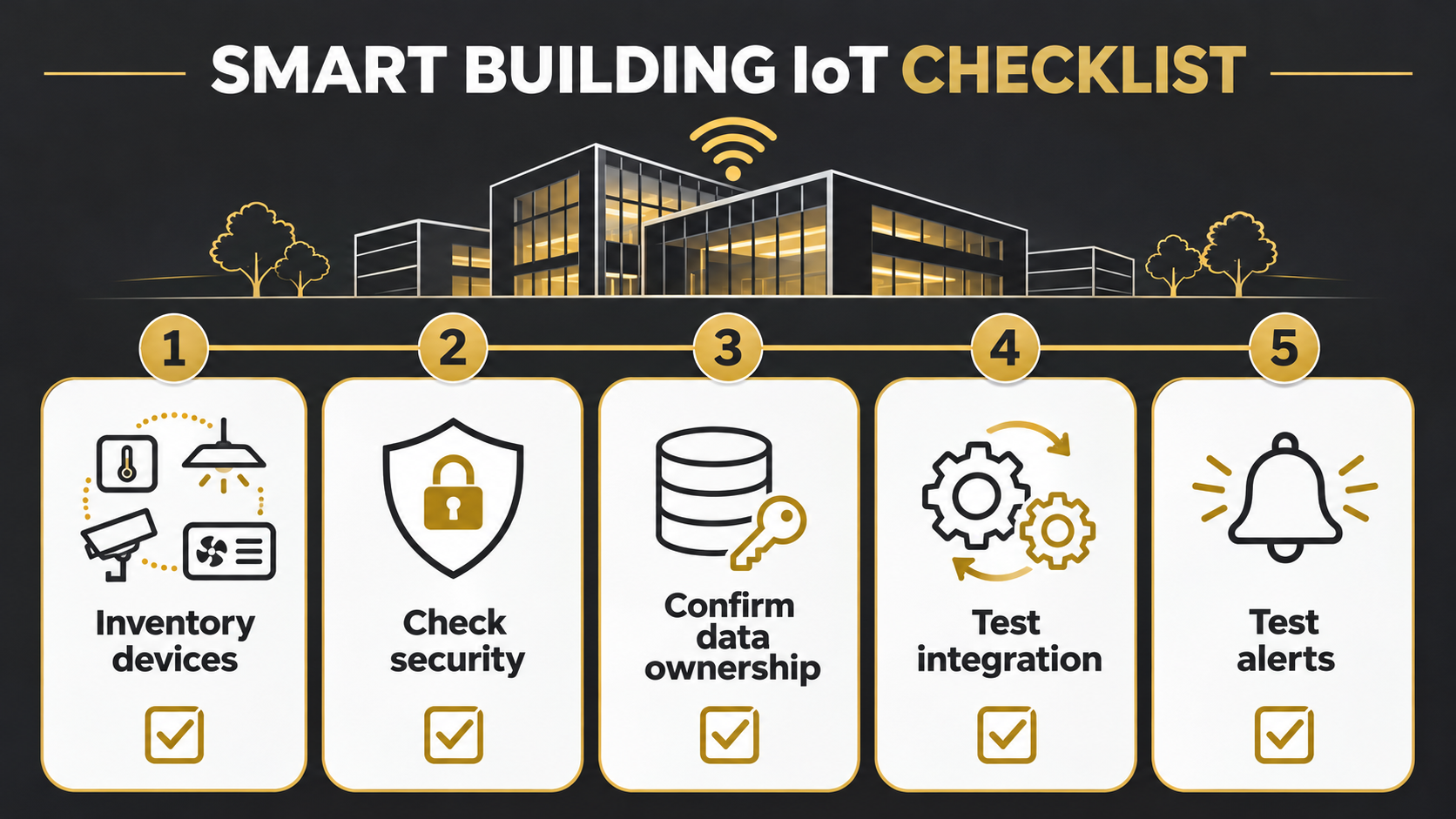
Inventori peranti
Senaraikan sensor, gerbang, kuasa, sambungan dan perisian. Rekod lokasi, pemilik, model, firmware, unit ukuran, penyelenggaraan dan keperluan kalibrasi. Uji liputan di lokasi sebenar.
Keselamatan siber
Tanya pembekal tentang identiti, konfigurasi, kemas kini, pemantauan, pelaporan kelemahan dan tempoh sokongan. Tukar kelayakan lalai jika berkenaan, hadkan akses pentadbir dan selaraskan pemisahan rangkaian, akses jauh serta tindak balas insiden dengan pasukan IT dan operasi. Panduan NIST untuk agensi persekutuan AS boleh membantu menentukan keperluan; ia bukan undang-undang Malaysia.
Data dan integrasi
Persetujui akses, lokasi penyimpanan, tempoh simpanan, eksport dan tindakan apabila kontrak tamat. Pertimbangkan data peribadi dan dapatkan nasihat undang-undang tempatan jika perlu. Minta kaedah integrasi yang didokumentasikan dan uji peranti sebenar. Sahkan yuran berulang dan sokongan secara bertulis.
Uji amaran dan serahan
Tetapkan ambang, penerima, eskalasi dan masa tindak balas. Uji bacaan luar julat, kehilangan sambungan dan pemulihan secara terkawal. Semak amaran palsu, latihan, penyelenggaraan dan pelan pemulihan. Amaran tidak menggantikan sistem keselamatan atau pemeriksaan profesional.
Soalan pembelian dan langkah seterusnya
Tentukan pemilik inventori, eksport data, kemas kini, operasi semasa gangguan dan penyelenggaraan selepas jaminan. Bandingkan kos sepanjang hayat dan nilai perintis terhadap garis asas. Rujuk penyelesaian IoT FXIT atau minta sebut harga. Sumber: NIST SP 800-213, disemak 12 November 2026.
Contoh perintis dan penerimaan
Contoh ilustrasi: pasang sensor suhu di bilik mesyuarat yang menerima aduan keselesaan. Rekod garis asas, lokasi, kekerapan bacaan dan penyemak. Bandingkan bacaan dengan rekod operator dan maklum balas penghuni; contoh ini bukan bukti penjimatan. Semak liputan, pemasangan, kuasa, julat operasi dan pemulihan selepas gangguan. Bacaan yang meragukan perlu dibandingkan dengan rujukan sesuai oleh petugas bertanggungjawab; isu keselamatan ikut prosedur bangunan.
Spesifikasi pembelian perlu menetapkan pembekal, pemasang, penguji dan penyelenggara. Minta demonstrasi integrasi dan eksport, setujui pelaporan kerosakan, jadual kemas kini serta kebenaran akses jauh. Semak inventori, akses, amaran dan pemulihan semasa penerimaan; rekod kecacatan dan uji semula. Gunakan hasil perintis untuk merancang peluasan dan bandingkan kos perkakasan, pemasangan, sambungan, perisian, sokongan serta penggantian sepanjang tempoh kontrak.
Sebelum perintis, tetapkan pemilik dan hasil dijangka bagi setiap ujian penerimaan. Simpan bukti bersama dokumen pembelian untuk semakan pasukan fasiliti dan IT. Jika ujian gagal, tetapkan pembetulan dan tarikh ujian semula. Dapatkan kelulusan sebelum menambah peranti.
简体中文 — 阅读全文
从业务目标开始
明确建筑问题、测量位置、负责人和数据支持的决策,例如调查舒适度投诉。仪表盘本身不保证节能或收益;先确定试点和基线。
盘点设备
列出传感器、网关、电源、连接、软件和服务。记录位置、负责人、型号、固件、单位、维护及校准要求,并在实际地点测试覆盖。
网络安全
向供应商确认设备识别、配置、更新、监控、漏洞报告及支持期限。适用时更改默认凭据,限制管理权限,并与 IT 和运营团队协调网络隔离、远程访问与事故响应。NIST SP 800-213 面向美国联邦机构,可作为需求参考,并非马来西亚法律。
数据与集成
签约前明确访问权、存储地点、保留期限、导出方式和合同结束后的处理。考虑是否涉及个人数据,必要时寻求本地法律意见。要求书面集成方案并测试真实设备,确认持续费用与支持承诺。
测试告警和交接
设定阈值、接收人、升级流程和响应时间。在受控试点中模拟异常读数、断线与恢复,确认负责人收到告警并知道如何处理。检查误报,记录验收、培训、维护和回退方案。告警不能替代安全系统或专业检查。
采购问题与下一步
确认设备清单负责人、数据导出、更新、网络中断处理及保修后维护。比较全生命周期成本并依据基线评估试点。可查看 FXIT IoT 方案或索取报价。来源:NIST SP 800-213,核查于 2026 年 11 月 12 日。
试点示例与验收
例如,在有舒适度投诉的会议室试用温度传感器,记录基线、位置、采样频率及检查人,并将读数与运营记录和用户反馈比较。这只是示例,不证明能够节能。安装前检查覆盖、安装条件、电源、工作范围和断线恢复;读数异常时由负责技术人员与适当参考值比较。安全问题应按建筑既定流程处理。
采购文件应明确供货、安装、测试和维护责任,要求演示集成及数据导出,约定故障报告、更新安排和远程访问批准。验收时核对设备清单、权限、告警及恢复,记录缺陷并复测。根据试点调整部署,比较合同期内硬件、安装、连接、软件、支持和更换成本。
试点前,为每项验收测试指定负责人和预期结果,并将证据与采购文件一同保存,供设施及 IT 团队审查。设备测试失败时,确定整改负责人和复测时间;连接更多设备前应取得批准。
Start with the building outcome
A smart building IoT Malaysia project should start with a problem: for example, investigating recurring comfort complaints or monitoring a critical equipment room. Define the measurement, location, accountable person and decision the information will support. A dashboard alone does not guarantee better performance or savings. Agree on a pilot and a baseline before making claims about results.
Inventory devices and dependencies
List the sensors, gateways, power supply, connectivity, software and services involved. Record location, owner, model, serial number, firmware, measurement units and maintenance responsibility. Confirm coverage and placement with the building team. Include replacement batteries, calibration requirements and access arrangements in the plan. Test connectivity in the actual installation environment.
Specify cybersecurity
Ask suppliers how devices are identified, configured, updated and monitored. Require a process for vulnerability reporting and timely updates, and ask how long updates will be supported. Change default credentials where applicable and restrict administrative access. Coordinate network separation, remote access and incident response with the responsible IT and operational teams. NIST’s SP 800-213 series is US federal guidance that can inform a requirements discussion; it is not a Malaysian legal mandate.
Confirm data rights and integration
Before signing, agree who can access data, where it is stored, how long it is retained, how it can be exported and what happens when the contract ends. Check whether readings could reveal personal information and obtain appropriate local legal advice when necessary. Ask for a documented integration method and test a representative device with the existing system. Clarify recurring fees and support commitments in writing; do not assume interoperability.
Test alerts and handover
Define meaningful thresholds, recipients, escalation and response times. Simulate an out-of-range reading, lost connection and recovery in a controlled pilot. Confirm the right people receive alerts and know what action to take. Review false alerts and document acceptance criteria, training, maintenance and rollback. A sensor alert supports a human decision; it does not replace safety systems or professional inspection.
Procurement questions
Who owns the device inventory? Can the customer export useful data? How are updates tested and installed? What happens during a network outage? Who maintains sensors after warranty? Obtain written answers, test assumptions and compare the full lifecycle cost rather than only the device price. Review the pilot against the baseline before considering wider deployment.
Next step
Explore FXIT IoT solutions or request a quotation. Reference: NIST SP 800-213 series, reviewed 12 November 2026. Confirm the exact project scope and contractual terms.
A practical pilot example
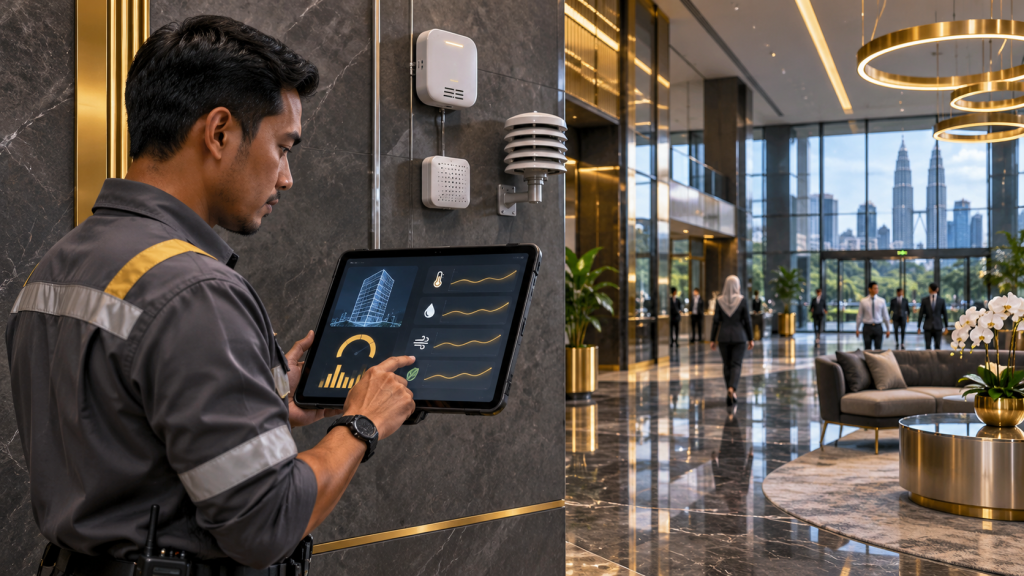
Consider an illustrative office building where occupants report intermittent discomfort in a meeting room. The facilities manager can define a limited pilot with a temperature sensor and an agreed observation period. Record the existing complaint process, sensor location, reading frequency and the person responsible for review. Compare readings with the operator’s records and occupant feedback. This is an example workflow, not evidence that the device will save energy or diagnose the cause of a problem.
Before installation, inspect network coverage, mounting conditions, power and access. Ask whether readings remain available during an outage and how data is restored afterwards. Check the vendor’s documented operating range and maintenance instructions against the proposed location. If readings appear implausible, compare them with a suitable reference and involve the responsible technician. Escalate safety concerns through established building procedures rather than relying solely on an IoT alert.
Define acceptance in writing
A purchase specification should identify who supplies, installs, tests and maintains each component. Request a demonstration of the documented integration method and data export. Agree how faults are reported, how updates are scheduled and who authorises remote access. During acceptance, check a sample device against the inventory, confirm authorised access and run the agreed alert and recovery scenarios. Record defects and retest them before sign-off.
For a wider rollout, use the pilot findings to revise device placement, responsibilities and support requirements. Compare proposals on hardware, installation, connectivity, software, support and replacement costs over the agreed term. Verify each charge with suppliers; no price or savings is assumed here. Ensure the customer can access documented data exports and understands dependencies before the contract ends.
Before the pilot begins, assign an owner to every acceptance test and record the expected result. Keep the test evidence with the procurement documents so that the facilities and IT teams can review the same facts. If a device fails, identify who will correct it and agree when the test will be repeated. Confirm approval before connecting additional devices.