November 16, 2026
ESG Data Collection for Malaysian Construction SMEs: A Practical Starter Guide

Bahasa Melayu
Mengapa PKS pembinaan memerlukan pelan data
Pengumpulan data ESG untuk PKS pembinaan Malaysia semakin penting apabila pemaju, kontraktor utama, pemberi pinjaman atau pelanggan meminta bukti amalan kelestarian. Subkontraktor kecil mungkin tidak tertakluk kepada kewajipan sama seperti syarikat tersenarai, tetapi masih menerima soal selidik rantaian bekalan. Bina rekod yang boleh dijejaki berdasarkan maklumat sebenar. Jangan terus membeli platform mahal atau mendakwa pematuhan yang belum dinilai. Kenal pasti pihak peminta, entiti dan projek terlibat, tempoh pelaporan serta bukti yang diterima.
Bezakan kewajipan dan permintaan
Rangka Kerja Pelaporan Kemampanan Kebangsaan Malaysia menggariskan penggunaan berfasa piawaian pendedahan ISSB bagi kategori syarikat tertentu. Ia bukan peraturan menyeluruh yang mewajibkan setiap subkontraktor kecil menyediakan laporan ISSB. Panduan Pendedahan ESG Dipermudah (SEDG) oleh Capital Markets Malaysia ialah rujukan sukarela yang praktikal untuk PKS dalam rantaian bekalan. Semak edisi terkini dan panduan sektor di sumber rasmi. Tanya sama ada soal selidik pelanggan berasaskan SEDG, dasar perolehan sendiri atau piawaian lain. Rekod sumber keperluan dan dapatkan nasihat profesional jika skop tidak jelas.
Tetapkan sempadan pelaporan
Tentukan sama ada data melibatkan satu projek, satu entiti undang-undang, beberapa cawangan atau kumpulan syarikat. Catat tarikh mula dan tamat, mata wang, unit, rawatan subkontraktor dan pengecualian. Projek pembinaan melibatkan lokasi berubah, pejabat sementara, mesin sewa dan pengangkutan luar; sempadan yang kabur boleh menghasilkan jumlah mengelirukan walaupun invois tepat. Lantik pemilik data daripada kewangan, operasi, sumber manusia dan tapak. Simpan daftar bukti dengan nama dokumen, tarikh, sumber, pemilik dan status semakan. Lindungi rekod pekerja sulit.
Mulakan dengan bukti alam sekitar
Rekod awal boleh merangkumi bil elektrik pejabat dan tapak, pembelian bahan api, bil air, rekod pemindahan sisa serta perolehan bahan. Simpan dokumen asal dan bezakan ukuran sebenar, invois dan anggaran. Bagi penjana atau peralatan sewa, sahkan siapa mengawal penggunaan bahan api dan sempadan aktiviti. Jangan campurkan liter, kWh, meter padu dan tan dalam satu lajur. Jika menganggar pelepasan gas rumah hijau, dokumentasikan kaedah, faktor pelepasan, tahun faktor dan batasan data. Sensor tenaga sahaja tidak membuktikan jejak karbon keseluruhan.
Masukkan aspek sosial dan tadbir urus
ESG bukan hanya tenaga dan karbon. Pembeli sektor pembinaan mungkin meminta rekod latihan pekerja, keselamatan pekerjaan, insiden, amalan buruh, saluran aduan, penilaian pembekal, antirasuah dan privasi data. Kumpulkan rekod secara berkadar dan sah seperti jumlah latihan, dasar bertulis, statistik insiden tanpa identiti dan prosedur diluluskan. Semak kewajipan undang-undang pekerjaan, keselamatan dan privasi Malaysia secara berasingan. Jika dasar belum wujud, nyatakan keadaan sebenar dan tetapkan tindakan. Jangan mendakwa sifar insiden hanya kerana rekod tidak lengkap.
Bina aliran kerja ringkas
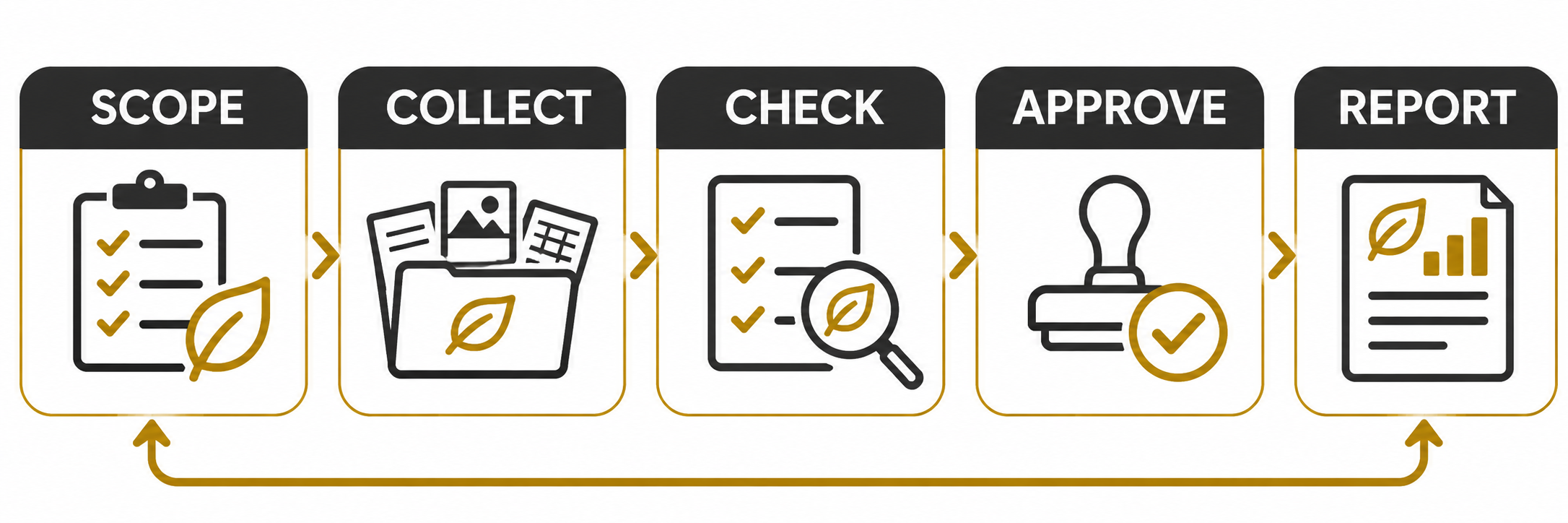
Gunakan lima langkah: terima permintaan, lantik pemilik data, kumpul bukti, semak kualiti dan luluskan pendedahan. PKS boleh bermula dengan hamparan terkawal serta repositori dokumen. Gunakan nama fail konsisten, nombor versi, hak akses dan log perubahan. Automasi hanya apabila ia mengurangkan kerja berulang atau meningkatkan kebolehpercayaan. Meter tenaga boleh membekalkan bacaan bertarikh sementara kewangan mengesahkan bil; sistem perolehan boleh mengeksport kategori tetapi masih memerlukan pengelasan. Semak bulanan, bukan hanya ketika tarikh akhir tender. Lantik pelulus angka luaran.
Elakkan kesilapan lazim
Elakkan pengiraan berganda elektrik antara meter tuan tanah dan penyewa, menganggap rekod hilang sebagai sifar, mencampurkan jumlah projek dan syarikat, menggunakan faktor penukaran lama atau membandingkan tahun dengan sempadan berbeza. Rekod andaian bersebelahan angka. Jika data subkontraktor tiada, jelaskan batasan dan jangan meneka. Berikan maklumat yang diminta sahaja serta simpan salinan penyerahan. Infografik ESG yang cantik membantu komunikasi tetapi bukan jejak audit. Setiap dakwaan penting mesti disokong dokumen dan penyemak.
Senarai semak 30 hari
Minggu pertama: senaraikan permintaan, entiti, projek, tempoh dan panduan. Minggu kedua: lantik pemilik dan kumpul bukti elektrik, bahan api, air, sisa, pekerja dan dasar. Minggu ketiga: seragamkan unit, uji sampel rekod dan catat kekurangan. Minggu keempat: semak dengan pengurusan, rekod batasan dan sediakan respons terkawal. Matlamatnya garis dasar jujur dan boleh diulang, bukan dakwaan kelestarian tanpa bukti. Maklumat IoT dan IT FXIT boleh membantu meneroka pengumpulan digital; sahkan skop penyelesaian sebelum perolehan dan bincangkan keperluan apabila aliran kerja jelas.
简体中文
为什么建筑业中小企业需要数据计划
马来西亚建筑业中小企业越来越常被开发商、总承包商、贷款机构和客户要求提供环境、社会与治理(ESG)实践的证据。小型分包商未必承担与上市公司相同的披露义务,但仍可能收到供应链问卷。合理做法是建立有来源、可追溯的真实记录,而不是立即购买昂贵平台或未经评估就宣称合规。首先确认提出要求的机构、所涉及的法人和项目、报告期间,以及对方接受的证据。
区分法定义务与客户要求
马来西亚国家可持续发展报告框架针对特定公司类别分阶段采用 ISSB 披露标准,并不意味着每家小型建筑分包商都必须编制 ISSB 报告。Capital Markets Malaysia 的简化 ESG 披露指南(SEDG)为供应链中小企业提供实用的自愿参考。提交前应核查官方最新版本及行业指南。询问客户问卷依据 SEDG、自有采购政策还是其他标准。记录每项要求的来源;适用范围不清楚时寻求专业意见。
明确报告边界
界定数据是针对单个项目、法人实体、多家分支机构还是合并集团。记录起止日期、货币、单位、分包商处理方式及排除事项。建筑项目地点变化频繁,涉及临时办公室、租赁设备和外包运输,因此边界特别重要。即使发票本身正确,边界不清也会导致汇总失真。由财务、运营、人力资源和工地管理人员分别负责数据,并建立记录文件名称、日期、来源、负责人和审核状态的证据台账。保护员工敏感信息。
先收集环境数据
起点包括办公室及工地电费单、燃油采购记录、水费单、废弃物转运记录和材料采购数据。保留原始凭证,区分实测值、账单值和估算值。租赁发电机或设备的燃油应核实控制责任及报告边界。不要在同一列混用升、kWh、立方米和吨。计算温室气体估算值时,应记录方法、排放因子、因子年份及数据局限。能源传感器可以辅助收集,但无法单独证明企业的完整碳足迹。
涵盖社会与治理
ESG 不只是能源和碳。建筑客户还可能关注工人培训、职业安全、事故报告、劳工实践、申诉机制、供应商筛查、反贿赂措施和数据隐私。依法按需要收集培训总量、正式政策、匿名事故统计和获批程序等资料。马来西亚劳动、安全和隐私法律义务应另行核实;自愿 ESG 指南不能取代法律。尚未建立的政策应如实说明并制定改进计划。不能因为缺乏记录就声称零事故。
设计简洁流程
流程分为五步:接收请求、分配数据负责人、收集证据、质量审核和批准披露。规模较小的企业可以从受控电子表格及文件库开始,统一文件名、版本、权限和修改日志。仅在能减少重复输入或提升可靠性时引入自动化。例如电表提供带时间戳的数据,财务部门核对账单;采购系统导出类别后仍可能需要人工分类。按月审核,不要等到投标截止日。明确由谁批准对外提供的数字。
避免常见错误
注意避免房东与租户电表重复计数、把缺失记录当作零、混淆项目和公司总量、使用过时转换因子,以及比较报告边界不同的年份。把假设写在相关数字旁。无法取得分包商数据时应说明局限,不能悄悄猜测。只提交对方需要的信息,并保留提交版本。精美 ESG 信息图有助沟通,却不能替代审计证据。重要声明必须有原始记录和指定审核人员支持。
30天起步清单
第一周整理信息请求,确认法人、项目、期间及适用指南。第二周指定负责人并收集电力、燃油、水、废弃物、员工和政策资料。第三周统一单位、抽样核对来源并记录缺口。第四周由管理层审核草稿、说明局限并准备受控回复。目标是建立诚实、可重复的基准,而不是未经证实的绿色宣传。可参考 FXIT 的物联网及 IT 服务信息探索数字化收集方案,但采购前必须核实具体服务范围,并在证据流程明确后讨论需求。
English
Why construction SMEs need a data plan
ESG data collection for Malaysian construction SMEs is increasingly relevant when developers, main contractors, lenders or customers request evidence about sustainability practices. A small contractor may not be directly subject to the same reporting obligations as a listed company, yet still receive detailed supply-chain questionnaires. The sensible response is to build a traceable record of information the business actually possesses. Do not begin by buying an expensive reporting platform or claiming compliance with a framework that has not been assessed. First identify who is asking, which legal entity and project are covered, what reporting period applies and which evidence they will accept.
Separate obligations from requests
Malaysia’s National Sustainability Reporting Framework addresses phased adoption of ISSB sustainability disclosure standards for specified categories of companies. It should not be presented as a blanket rule that every small construction subcontractor must prepare an ISSB report. Capital Markets Malaysia’s Simplified ESG Disclosure Guide, or SEDG, offers a practical voluntary reference for SMEs in supply chains. The latest edition and any sector-specific guidance should be checked at the official source before preparing a submission. Ask whether a customer’s questionnaire follows SEDG, its own procurement policy or another standard. Record the source of each requirement and obtain professional advice where applicability is uncertain.
Set a clear reporting boundary
Define whether the data concerns one project, one legal entity, several branches or a consolidated group. Identify the start and end dates, currency, units, subcontractor treatment and any exclusions. Construction projects can move between locations and involve temporary offices, rented machinery and outsourced transport, so boundaries matter. A spreadsheet without a clear boundary can produce misleading totals even when individual invoices are correct. Assign a data owner in finance, operations, human resources and site management. Maintain an evidence register with document name, date, source, responsible person and review status. Avoid placing confidential employee records in an unsecured shared folder.
Start with environmental evidence
Practical starting records include electricity bills for offices and sites, fuel purchase logs, water bills, waste transfer records and material procurement data. Keep the original source documents and note whether figures are measured, invoiced or estimated. For rented generators or equipment, confirm who controls fuel use and whether the activity belongs within the requested boundary. Do not mix litres, kWh, cubic metres and tonnes in one column. If converting activity data into greenhouse-gas estimates, document the calculation method, emissions factor, factor year and data limitations. An energy dashboard can support collection, but a sensor alone does not establish the full carbon footprint.
Include people and governance
ESG is not only about energy and carbon. Construction buyers may ask about worker training, occupational safety, incident reporting, labour practices, grievance processes, supplier screening, anti-bribery controls and data privacy. Collect records proportionately and lawfully, such as training attendance totals, documented policies, anonymised incident statistics and approved procedures. Check relevant Malaysian employment, safety and privacy requirements separately; a voluntary ESG guide does not replace legal duties. Where a policy is missing, state that it is not yet documented and assign an improvement action. Never invent a zero incident count merely because the company has not been recording incidents consistently.
Design a lightweight workflow
A practical workflow has five stages: request intake, data ownership, evidence capture, quality review and approved disclosure. Begin with a controlled spreadsheet and document repository if the business is small. Use consistent filenames, version numbers, access permissions and a simple change log. Add automation only where it reduces repeated entry or improves reliability. For example, energy meters may provide time-stamped consumption data while finance validates bills; a procurement system may export purchase categories but still require manual classification. Establish monthly checks instead of waiting until a tender deadline. Give one person authority to approve externally shared numbers.
Avoid common reporting errors
Watch for double-counting electricity across landlord and tenant meters, treating missing records as zero, confusing project-level and company-level totals, using outdated conversion factors or comparing years with different business boundaries. Record assumptions next to the figure they affect. If a subcontractor’s data is unavailable, disclose the limitation rather than quietly substituting a guess. For supplier questionnaires, provide only the requested information and retain the submitted version. An attractive ESG infographic is useful for communication, but it is not an audit trail. A credible submission links each material claim to underlying records and a named reviewer.
A 30-day starter checklist
In week one, list the reporting requests and identify the entity, project, period and applicable guidance. In week two, assign owners and gather electricity, fuel, water, waste, workforce and policy evidence. In week three, standardise units, test a sample of source records and document missing data. In week four, review the draft with management, record limitations and prepare a controlled response. The aim is an honest, repeatable baseline, not an unverified sustainability claim. FXIT’s IoT and IT service information may help teams explore digital collection options; confirm the exact scope of any solution before procurement. Request a requirements discussion when the evidence workflow is clear.
Sources verified 16 November 2026: Securities Commission NSRF guidance; Capital Markets Malaysia SEDG. FXIT: IoT, Services, Request a Quote.