November 18, 2026
Phishing Reporting Workflow: A Practical Checklist for Malaysian SMEs

Bahasa Melayu — artikel penuh
Proses melaporkan e-mel mencurigakan untuk PKS Malaysia
Latihan mengesan phishing sahaja tidak mencukupi jika pekerja tidak tahu kepada siapa perlu melaporkan mesej. Proses yang jelas membantu pasukan bertindak lebih awal. Ia perlu digabungkan dengan kawalan teknikal, latihan dan pelan respons insiden; tiada satu langkah yang menjamin semua serangan dapat dihentikan.
Tetapkan saluran
Berikan satu saluran laporan yang mudah dicari dan seorang pemilik sandaran. Tentukan cara pekerja melaporkan mesej apabila e-mel atau rangkaian tidak tersedia. Jangan minta pekerja membalas penghantar, membuka lampiran atau menghantar kata laluan untuk membuktikan mesej itu mencurigakan. Semak tetapan organisasi tentang cara mengekalkan maklumat mesej untuk siasatan.
Ajarkan tindakan awal
Jika mesej meminta log masuk, pembayaran segera atau perubahan butiran bank, berhenti dan sahkan melalui saluran yang telah diketahui secara bebas. Jangan gunakan nombor telefon dalam mesej yang mencurigakan. Laporkan walaupun pekerja tidak pasti. Jika pautan sudah dibuka atau maklumat dimasukkan, maklumkan perkara itu segera supaya pasukan IT boleh menilai tindakan seterusnya.
Urus laporan dengan jelas
Pasukan yang menerima laporan perlu merekod masa, pengguna, mesej dan tindakan yang sudah berlaku, tanpa mengumpulkan rahsia yang tidak diperlukan. Tetapkan siapa menyemak, bagaimana laporan dikelaskan dan bila perlu dinaikkan kepada respons insiden. Jangan menghukum laporan yang dibuat dengan niat baik; kelewatan boleh meningkatkan kesan.
Gabungkan kawalan teknikal
CISA mengesyorkan pendekatan berlapis termasuk latihan serta perlindungan e-mel dan akaun. Semak penapisan e-mel, pengesahan berbilang faktor yang sesuai, kawalan akses dan kemas kini bersama pentadbir. MFA mengurangkan risiko tetapi tidak menghapuskan semua bentuk phishing. Prosedur respons harus mengambil kira akaun yang mungkin terjejas dan perubahan pembayaran yang mencurigakan.
Latih dan uji
Gunakan contoh berkaitan perniagaan seperti invois palsu atau perkongsian fail yang tidak dijangka. Uji sama ada pekerja dapat mencari saluran laporan dan sama ada pasukan respons mengetahui pemilik tindakan. Ukur masa pengakuan dan penutupan, bukan hanya bilangan orang yang mengklik. Lindungi privasi dan gunakan keputusan untuk memperbaiki proses.
Semak dan belajar
Selepas insiden atau latihan, rekod apa yang berlaku, tindakan, keputusan dan penambahbaikan. Semak senarai hubungan, pembekal, waktu sokongan dan cara memberitahu pengguna terjejas. Uji semula perubahan. PKS boleh bermula dengan arahan satu halaman, pemilik yang jelas dan saluran laporan yang dipantau.
Senarai semak
- Saluran dan pemilik laporan jelas.
- Pekerja tahu berhenti, sahkan dan laporkan.
- Pasukan IT mempunyai proses penilaian dan eskalasi.
- Latihan merangkumi laporan selepas klik.
- Kawalan teknikal dan proses diuji secara berkala.
Lihat perkhidmatan IT FXIT atau bincangkan keperluan. Sahkan skop sokongan sebenar sebelum perolehan.
简体中文 — 完整文章
马来西亚中小企业可疑邮件报告流程
如果员工不知道向谁报告可疑邮件,仅靠识别钓鱼邮件的培训并不充分。清晰的报告流程有助于团队更早采取行动。它应结合技术控制、培训和事件响应计划;没有单一措施能保证阻止所有攻击。
确定报告渠道
提供一个容易找到的报告渠道和备用负责人,并规定邮件或网络不可用时的报告方式。不要要求员工回复可疑发件人、打开附件或提交密码来证明邮件可疑。根据企业设置选择保留邮件信息的方式,以便调查。
教会员工初步行动
如果邮件要求登录、紧急付款或变更银行资料,先暂停,并通过独立确认的已知渠道核实。不要使用可疑邮件中的电话号码。即使不确定也应报告。如果已经点击链接或输入资料,立即说明,以便 IT 团队评估下一步。
明确处理责任
接收团队应记录时间、用户、邮件和已经发生的操作,避免收集不必要的秘密。明确审核人、分类方式及何时升级为事件响应。不要惩罚善意报告;延迟报告可能扩大影响。
结合技术防护
CISA 建议结合培训、邮件保护和账户防护等多层措施。与管理员检查邮件过滤、合适的多因素认证、访问权限和更新。多因素认证可降低风险,但不能消除所有钓鱼方式。响应流程还应考虑可能受影响的账户和可疑付款变更。
培训并测试
使用与业务相关的例子,例如虚假发票或意外的文件共享。测试员工能否找到报告渠道,以及响应团队是否了解行动负责人。衡量确认和处理时间,不要只统计点击人数。保护隐私,并用结果改进流程。
复盘和改进
事件或演练后,记录经过、措施、结果和改进事项。检查联系人、供应商、支持时间及通知受影响用户的方式,并重新测试更改。中小企业可从一页指引、明确负责人和有人监控的渠道开始。
检查清单
- 报告渠道和负责人明确。
- 员工知道暂停、核实和报告。
- IT 团队有评估与升级流程。
- 培训涵盖点击后的报告。
- 定期测试技术控制和流程。
查看 FXIT IT 服务 或 讨论需求。采购前确认实际支持范围。
A phishing reporting workflow for Malaysian SMEs
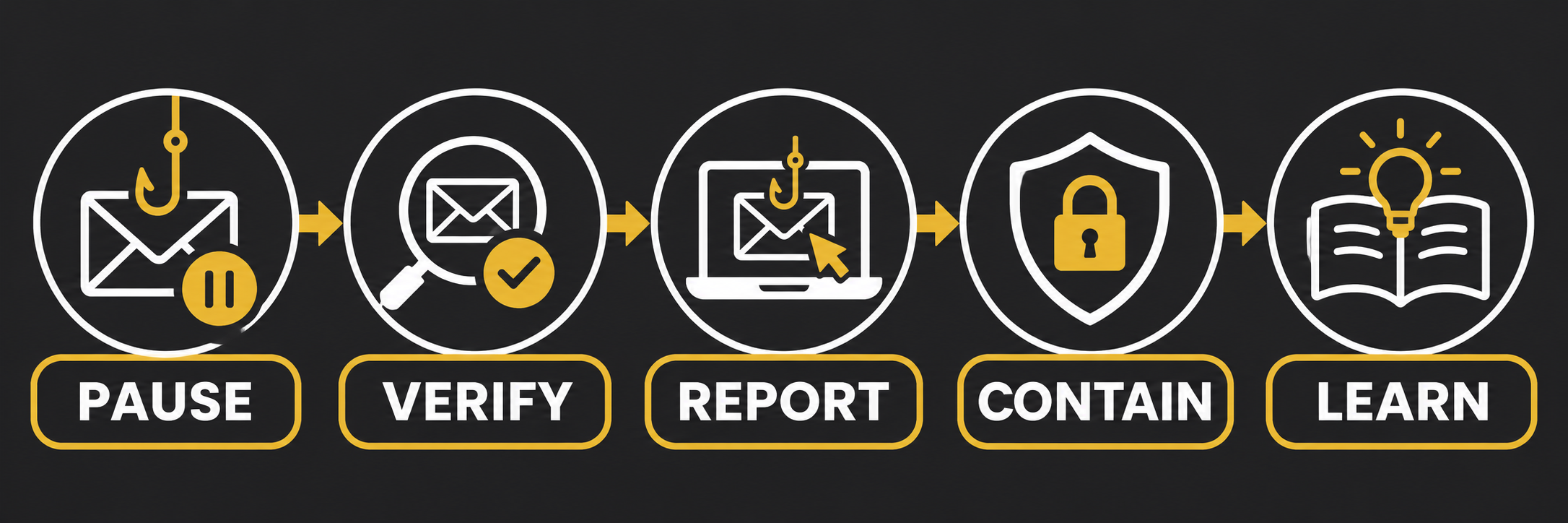
A phishing reporting workflow gives staff a practical next step when an email, message or file-sharing request looks suspicious. Awareness training helps people recognise warning signs, but it has limited value if no one knows where to report or what happens next. A Malaysian SME can start with a clear reporting channel, a named owner and a simple response process. These steps complement technical controls and incident planning; none guarantees that every attack will be stopped.
1. Establish a reporting channel
Choose one channel that staff can find quickly and assign a primary and backup owner. Make the instructions available during onboarding and in a location people can reach without searching an old email. Decide how an employee reports an issue if the normal email or network service is unavailable.
Do not ask staff to reply to the suspicious sender, open an attachment or provide a password to prove that a message is suspicious. Agree with the email administrator on a reporting method that preserves useful message information while limiting unnecessary handling. Tell staff what acknowledgement to expect and when an urgent issue should be escalated by phone.
2. Teach the first response
Requests for urgent payment, bank-detail changes, login verification or unexpected file access deserve a pause. Verify the request through a separately established contact channel, such as a known telephone number from the company directory, rather than a number supplied in the suspicious message. A familiar name or logo alone is not proof of authenticity.
Encourage reporting even when the employee is unsure. If a link was opened, a file downloaded or information entered, staff should say so promptly. The response owner can then assess the situation and follow the organisation’s incident plan. Do not promise that simply deleting the email undoes any action already taken.
3. Assign triage responsibilities
The receiving team should record the report time, affected user, relevant message and actions already taken, while avoiding unnecessary collection of secrets or personal information. Assign someone to review the report, classify urgency and decide when to involve the incident-response lead or external support provider.
Define a response for potentially affected accounts and suspected payment changes. Where a financial transaction may be involved, the business owner should use the organisation’s established bank and finance escalation procedures. Avoid punishing good-faith reports: people are more likely to raise an issue early when the process is supportive and clear.
4. Combine training with technical controls
CISA recommends a layered approach that combines staff awareness with technical safeguards. Review email filtering, appropriate multi-factor authentication, access permissions, patching and account recovery with the responsible administrator. MFA reduces account risk but does not eliminate every phishing method, so staff should still report suspicious activity.
Document which controls the organisation operates and which are provided by a supplier. Confirm who monitors alerts, their support hours and the procedure for urgent escalation. Security features that are enabled but unmonitored may not deliver the response the business expects.
5. Practise the complete process
Use examples relevant to the business, such as a false invoice, a changed bank account or an unexpected document-sharing invitation. Test whether staff can locate the reporting channel and whether the receiving team knows who owns the next action. Include a scenario in which an employee reports after clicking, because timely disclosure still matters.
Measure acknowledgement and resolution times, not only how many people clicked during an exercise. Respect privacy and use findings to improve instructions, training and technical controls. A small exercise with clear follow-up can be more useful than a large campaign with no action owner.
6. Review and improve
After an incident or exercise, record what happened, what actions were taken, the outcome and improvements. Review contact lists, provider responsibilities, support hours and how affected users are informed. Assign owners and dates for corrective actions, then test the changes. A one-page instruction and a monitored reporting channel are a practical starting point for a small organisation.
Management checklist
- A visible reporting channel and backup owner exist.
- Staff know to pause, independently verify and report.
- The IT team has a triage and escalation process.
- Training covers reporting after a click or disclosure.
- Technical controls and the workflow are tested regularly.
Explore FXIT IT services or discuss your requirements. Confirm the actual support scope and responsibilities before procurement.
Sources checked 18 November 2026: CISA: Counter-Phishing Guidance; CISA: Stopping the Phishing Attack Cycle.