
November 23, 2026
Building Energy Data for ESG Reporting in Malaysia: Evidence Checklist

Data Tenaga Bangunan untuk ESG di Malaysia
Pengurusan data tenaga yang baik bermula dengan skop bangunan, tempoh pelaporan dan sumber data yang jelas. Bezakan bil utiliti, bacaan meter dan anggaran. Jangan nyatakan sesuatu keperluan undang-undang terpakai kepada semua bangunan tanpa menyemak syarat semasa.
Tetapkan pemilik data, lokasi meter, unit pengukuran dan kekerapan kutipan. Simpan bil asal, eksport meter, catatan pembetulan dan bukti semakan. Semak bacaan yang hilang, perubahan penyewa serta tempoh yang tidak lengkap.
Bagi projek rintis, bandingkan jumlah submeter dengan bil utiliti dan dokumentasikan perbezaan. Jangan dakwa pengurangan karbon atau penjimatan tenaga tanpa kaedah pengiraan dan garis dasar yang sah.
Sebelum mendapatkan perisian atau perkakasan, semak keperluan akses, eksport data, penyimpanan, keselamatan dan kos sokongan. Rujuk panduan rasmi Malaysia untuk kewajipan yang benar-benar berkenaan.
FXIT SERVICES — Request a quote / Minta sebut harga / 申请报价
Sempadan dan kualiti data
Senaraikan bangunan, tempoh, meter utama dan submeter; tandakan kawasan atau beban yang bertindih supaya tidak dikira dua kali. Catat pemilik, unit, sela bacaan dan perubahan penyewa atau meter. Bezakan bacaan sebenar daripada anggaran dan simpan versi asal serta sebab pembetulan.
Bandingkan jumlah submeter dengan bil atau meter utama bagi tempoh dan sempadan yang sama. Perbezaan mungkin disebabkan masa bacaan, beban tidak bermeter atau kesilapan. Tandakan jurang, lantik penyemak dan dokumentasikan tindakan; jumlah yang lebih rendah sahaja tidak membuktikan penjimatan.
Pelaporan dan perolehan
Jika mengira pelepasan, nyatakan sempadan, unit, kaedah, faktor pelepasan, sumber dan versi yang digunakan. Sahkan kewajipan dan panduan yang sesuai untuk organisasi; papan pemuka tidak membuktikan pematuhan. Minta eksport, log perubahan, hak akses, sandaran, kalibrasi dan pemulihan selepas gangguan. Kos termasuk pemasangan dan sokongan berterusan.
Mulakan dengan satu bangunan dan satu tempoh lengkap. Tetapkan pemilik data, sasaran kelengkapan dan kekerapan semakan. Uji aliran dari bil asal ke angka laporan serta pembetulan yang diluluskan sebelum peluasan.
Rekodkan juga perubahan faktor pengiraan dan versi laporan supaya perbandingan tahun ke tahun tidak mengelirukan. Simpan penjelasan bersama data asal untuk semakan seterusnya.
马来西亚建筑能源数据与 ESG 报告
良好的建筑能源数据管理首先需要明确建筑范围、报告期间和数据来源。应区分公用事业账单、仪表读数和估算值。未经核实适用条件,不应声称某项法规适用于所有建筑。
指定数据负责人,记录仪表位置、计量单位和采集频率。保留原始账单、仪表导出文件、修正记录及审核证据。检查缺失读数、租户变化和不完整的报告期间。
试点项目可将分表读数与公用事业账单进行核对,并记录差异。没有可靠的基准和计算方法,不应宣称已经实现碳减排或能源节约。
采购软件或硬件之前,应检查访问权限、数据导出、保留政策、网络安全和支持成本。适用的监管义务应以马来西亚官方最新指南为准。
FXIT SERVICES — Request a quote / Minta sebut harga / 申请报价
边界和数据质量
列明建筑、期间、总表和分表,标记重叠区域和负载,避免重复计算。记录负责人、单位、读数频率及租户或仪表变化。区分实际读数与估算,保留原始版本和修改原因。
在相同期间和边界下核对分表与账单或总表。差异可能来自读数时间、未计量负载或错误。标记缺口,指定审核人并记录处理过程;数值下降本身不能证明节能。
报告与采购
如计算排放,应记录边界、单位、方法、排放因子、来源和版本,并核实组织适用的要求;仪表板不能证明合规。采购时要求数据导出、修改记录、访问权限、备份、校准及断网恢复,并计入安装和持续支持成本。
先选择一个建筑和完整期间,明确负责人、数据完整率目标及复核频率。扩展前测试从原始账单到报告数字的追溯及经批准的更正流程。
同时记录计算因子和报告版本的变化,避免跨年度比较产生误导。将说明与原始数据一同保存,便于后续审核。
Building Energy Data for ESG Reporting in Malaysia
Building energy data for ESG reporting in Malaysia becomes useful only when the organization can explain where the numbers came from. Building owners, facility managers and SMEs should define the reporting boundary, measurement period and responsible staff before selecting a dashboard. Electricity bills, submeters and estimated consumption are different evidence sources; each needs a clear label.
Start with an inventory of buildings, floors, tenants, utility accounts and installed meters. Record the meter identifier, unit, location, reading interval and the person responsible for maintaining it. Note whether a meter measures a whole building, a tenant space or a specific plant room. Avoid combining overlapping readings, because that can double-count consumption.
Preserve original utility bills and meter exports in a controlled folder. Keep a log of missing periods, replaced meters, estimated values and corrections. A reviewer should be able to trace each monthly figure back to its source. Establish a documented approval process for changes rather than silently overwriting earlier figures. Retain evidence according to the organization’s actual reporting and contractual requirements.
Where feasible, reconcile submeters against the relevant main meter or utility account. Differences can arise from timing, measurement boundaries, unmetered loads or data quality. Investigate material gaps and document the explanation. If a building changes occupancy or operating hours, record the change before interpreting consumption trends. A lower monthly figure does not automatically prove an efficiency improvement.
For a pilot dashboard, prioritize readable trends, missing-data flags, meter health and downloadable source records. Define who can edit readings and who can approve corrections. Assess whether cloud connectivity is suitable for the facility’s network and security policies. Consider integration with existing building-management systems only after checking interface availability and access permissions.
A procurement checklist should include metering accuracy, installation requirements, communications, data retention, export formats, role-based access, backup, calibration and ongoing support. Ask vendors to demonstrate an audit trail and explain how the system handles outages. Calculate the cost of maintaining reliable evidence, not just the subscription fee.
Frequently asked questions: Does installing a dashboard establish ESG compliance? No; obligations depend on the reporting entity, applicable rules and chosen standards. Can meter data directly establish emissions? It may support calculations, but appropriate factors, boundaries and methods are required. What is a useful first milestone? A complete, reconciled dataset for a defined building and reporting period. Verify current Malaysian requirements against official guidance before making compliance claims.
FXIT SERVICES — Request a quote / Minta sebut harga / 申请报价
Build an evidence register
For each account, identify the building or area covered, the utility provider, billing period, meter identifier, measurement unit and responsible person. Map submeters to the main supply and note any overlapping coverage. Keep bills, interval readings and estimates distinct. Record the reason, author and approval for every correction so a reviewer can reconstruct the number originally reported and understand the change.
Check completeness at a regular interval. Flag missing months, implausible readings, changes in multiplier, meter replacement and irregular billing periods. Reconcile like with like: a calendar month of submeter readings may not match a utility bill spanning different dates. Explain differences caused by shared loads or areas outside the submeter boundary. Escalate unresolved gaps rather than quietly inserting a plausible value.
Separate consumption from emissions
Energy consumption and greenhouse-gas emissions are related but different measures. If an organization converts electricity consumption into an emissions estimate, document the reporting boundary, unit, calculation method, factor, source and version. Verify the requirements and guidance applicable to the reporting entity and period. Do not claim that installing meters or software automatically establishes compliance, verified savings or a specific emissions reduction.
Make the pilot auditable
Choose one building and a complete reporting period. Agree ownership, review frequency, a completeness target and how exceptions will be resolved. Test the path from an original bill or meter export through a reviewed dataset to a published figure. Demonstrate role-based permissions, a change log, backup, data export and recovery after a connection outage. Budget for installation, calibration, staff time and ongoing support before deciding whether to extend the system.
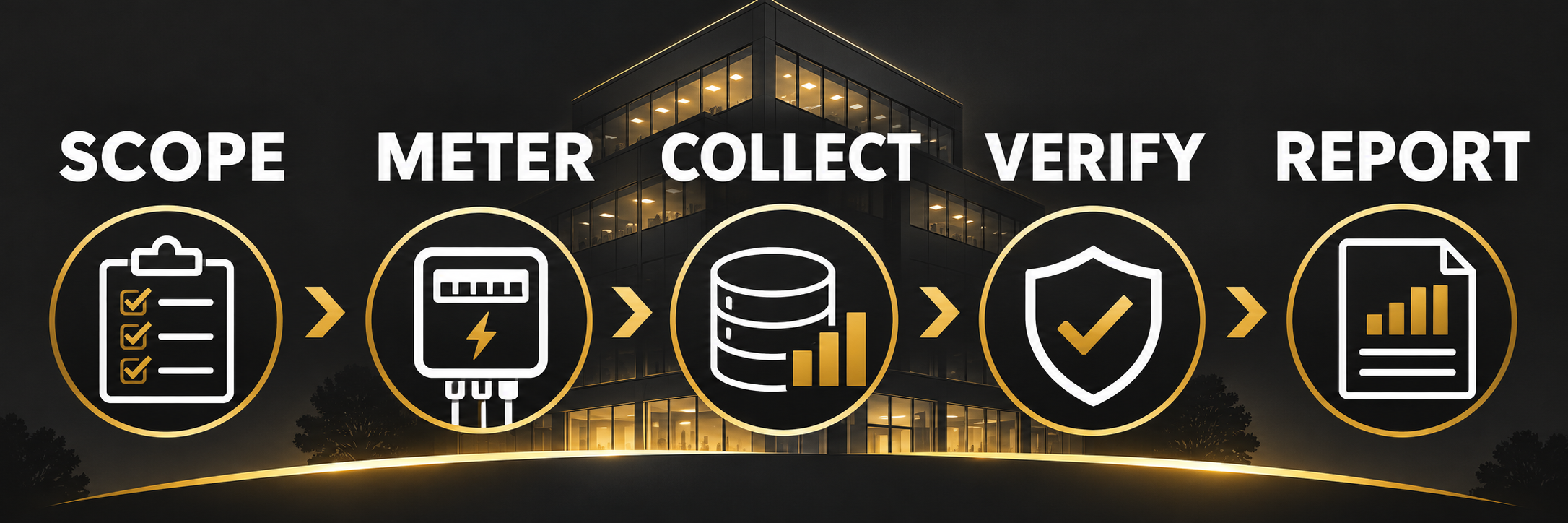
Record changes to calculation factors and report versions so that year-on-year comparisons are not misleading. Retain explanations alongside the original evidence for subsequent review.
Sources checked 23 November 2026: Simplified ESG Disclosure Guide; SEDG greenhouse gas calculator methodology.