
November 28, 2026
BIM Coordination Meetings in Malaysia: An Issue-to-Closeout Checklist

Bahasa Melayu
Mesyuarat Koordinasi BIM di Malaysia: Senarai Semak Penutupan Isu
Sediakan keputusan
Mesyuarat koordinasi BIM perlu menggerakkan isu terdokumen ke arah keputusan, bukan sekadar memaparkan senarai pertembungan panjang. Pasukan Malaysia boleh bersetuju tentang versi model, kawasan dan keputusan tertunda dalam skop. Proses perlu mengikut kontrak, keperluan maklumat dan tanggungjawab profesional projek.
Sahkan pakej model
Sebelum mesyuarat, senaraikan model seni bina, struktur dan perkhidmatan bangunan, pengarang, versi, tarikh dan lokasi rujukan. Semak sistem koordinat, unit dan kedudukan menggunakan sampel sesuai. Maklumkan model hilang atau lapuk. Hasil koordinasi bergantung pada maklumat yang disertakan.
Bina agenda tindakan
Kumpulkan isu mengikut lokasi, disiplin dan kesan operasi. Pilih perkara yang memerlukan keputusan dan kenal pasti orang yang boleh menerangkannya. Kongsi senarai serta paparan lebih awal melalui saluran diluluskan. Bezakan kemungkinan pertembungan geometri daripada isu reka bentuk yang disahkan; sesetengah pertindihan mungkin disengajakan atau di luar skop.
Rekod isu dengan jelas
Berikan rujukan unik, penerangan, lokasi, versi model terlibat dan bukti visual atau dokumen yang cukup. Lantik pemilik dan persetujui tarikh respons. Rekod andaian dan kebergantungan termasuk keputusan disiplin lain. Elakkan arahan kabur seperti ‘betulkan ini’.
Bincang tanggungjawab dan kesan
Minta disiplin layak menyemak kebolehbinaan, akses, keselamatan, niat reka bentuk dan kesan lain. Persetujui pihak yang mencadangkan penyelesaian, tetapi jangan anggap minit mesyuarat sebagai kelulusan automatik perubahan reka bentuk atau kontrak. Eskalasi hal komersial, jadual atau keselamatan mengikut prosedur projek.
Jejak keputusan dan status
Gunakan status yang difahami peserta seperti terbuka, semakan, sedia disahkan dan ditutup. Rekod keputusan, pengarang, tarikh dan permintaan perubahan berkaitan. Dokumentasi Model Coordination Autodesk menerangkan penugasan dan sejarah isu; semak fungsi serta konfigurasi versi sebenar.
Sahkan pembetulan
Pengarang bertanggungjawab mengemas kini model atau dokumen dan mengenal pasti versi baharu. Penyemak memeriksa lokasi dan bukti terhadap isu asal serta konflik baharu yang jelas dalam kawasan semakan. Tutup hanya apabila kriteria dan kuasa yang dipersetujui dipenuhi.
Urus pengecualian
Sesetengah isu memerlukan maklumat lanjut, keputusan pelanggan atau penerimaan keadaan diketahui. Rekod sebab, pemilik, risiko dan tarikh semakan, bukan menyembunyikan atau menutup awal. Maklumkan pasukan apabila keputusan berubah. Simpan maklumat sulit dalam sistem dan kawalan akses diluluskan.
Tambah baik mesyuarat
Selepas mesyuarat, edarkan senarai tindakan diluluskan kepada peserta dipersetujui melalui saluran projek. Semak isu lewat, berulang dan pemilik tidak jelas pada sesi berikutnya. Uji sama ada ahli yang tidak hadir boleh mencari status dan bukti. Fokuskan agenda pada keputusan.
Serahan dan langkah seterusnya
Pada peringkat projek, serahkan daftar isu, pengecualian tertunda, versi model dan rekod keputusan yang dipersetujui. Sahkan pautan serta kebenaran berfungsi. Untuk pertanyaan perisian, terangkan disiplin, format dan aliran semakan kepada FXIT serta sahkan terma dan skop semasa. Alat koordinasi tidak menjamin projek bebas pertembungan atau patuh.
Persetujui hasil mesyuarat
Sebelum mesyuarat, tetapkan keputusan dan maklumat yang diperlukan. Jika perubahan reka bentuk boleh menjejaskan kos atau jadual, lantik pihak yang akan mengurus proses kontrak. Gunakan rujukan isu yang sama dalam minit dan permintaan berasingan supaya keputusan tidak dibincang tanpa pemilik.
Semak sampel sebelum penutupan
Pilih sampel isu ditutup dan semak pemilik, bukti, versi model serta penyemak yang meluluskan. Pastikan fail sokongan masih boleh dicapai pihak dibenarkan. Jika bukti tiada, buka semula atau tandakan mengikut prosedur projek. Rekod ringkas yang boleh dijejak lebih berguna untuk serahan daripada senarai besar tidak disemak.
Elakkan metrik mengelirukan
Bilangan isu menurun tidak membuktikan koordinasi selesai. Semak keterukan, bukti dan status isu tertinggal serta item yang ditutup tanpa pengesahan. Persetujui kenyataan penyelesaian dengan pihak bertanggungjawab dan simpan asas keputusan.
简体中文
马来西亚 BIM 协调会议:问题至关闭清单
为决策做准备
BIM 协调会议应推动已记录问题获得决定,而不是只展示长长的碰撞列表。马来西亚项目团队应提前约定审查的模型版本、区域和待决事项。流程应遵循项目合同、信息要求及专业责任。
确认模型包
会前列出审查的建筑、结构和机电模型及其作者、版本、日期和参考位置。通过适当样本检查约定坐标系、单位及模型位置,并告知参与者缺失或过期模型。协调结果取决于纳入审查的信息。
制定可执行议程
按位置、专业和运营影响归类问题,挑选需要决定的事项并指定说明人。通过批准的项目渠道提前分享清单和视图。区分潜在几何碰撞与已确认的设计问题;部分重叠可能是有意的或不在约定范围内。
清楚记录问题
为每项分配唯一编号,记录描述、位置、受影响模型版本及足够的图像或文件证据。指定负责人并约定回复日期,记录假设及对其他专业决定的依赖。避免只写“修复此处”等含糊指令。
讨论责任与影响
请相关合格专业人员审查可施工性、通行、 安全、设计意图及下游影响。约定由谁提出解决方案,但不能将会议记录当作设计或合同变更的自动批准。商务、进度或安全问题应按项目既定程序升级。
跟踪决定和状态
使用参与者理解的状态,例如开放、审核中、待验证和关闭。记录决定、作者、日期和关联变更请求。Autodesk Model Coordination 文档介绍了分配问题和审查活动记录;实际功能及项目配置应按所用版本核实。
验证修正
负责人更新约定模型或文件并标明新版本,审核人依据原问题检查相关位置及证据,并确认审查区域没有明显新增冲突。只有满足约定标准和权限要求后才关闭问题。
管理例外
部分问题需要更多信息、客户决定或接受已知情况。应记录原因、负责人、风险及下次审查日期,而非隐藏或过早关闭。决定变化时通知相关团队,机密项目信息应保存在批准的系统并受权限控制。
改进下次会议
会后通过项目正常渠道向约定参与者分发批准的行动清单。下次审查逾期、重复及责任不明确的问题,测试未参会人员能否找到当前状态和证据。调整议程,使会议聚焦决策而非逐条朗读清单。
移交与下一步
在项目里程碑向接收团队提供约定的问题清单、未解决例外、相关模型版本及决定记录,核实链接和权限。咨询软件时可向 FXIT 说明专业、格式和审核流程,并核实当前产品条款和服务范围。协调工具不能保证项目无碰撞或合规。
约定可衡量的会议结果
会前确定需要的决定及所需信息。设计变更可能影响进度或成本时,指定人员负责合同流程。会议记录和单独请求使用一致的问题编号,降低讨论后无人负责的风险。
关闭前抽样审查
抽查已关闭问题,确认负责人、解决证据、模型版本和批准审核人均已记录,并检查授权人员是否仍能访问支持文件。缺少证据时,按项目流程重新打开或标记。可追溯的简洁记录比未经审查的大量清单更有利于移交。
避免误导性指标
问题数量下降本身不能证明协调完成。应审查剩余问题的严重性、证据和状态,并检查未经验证就关闭的事项。与项目责任方商定完成声明并保留决定依据。
English
BIM Coordination Meetings in Malaysia: An Issue-to-Closeout Checklist
Prepare for decisions
A BIM coordination meeting should move documented issues toward decisions, not simply display a long list of model clashes. Malaysian project teams can improve the discussion by agreeing which model versions, areas and unresolved decisions are in scope. The process should follow the project’s contract, information requirements and agreed professional responsibilities.
Confirm the model package
Before the meeting, list the architectural, structural and building-services models being reviewed, their authors, versions, dates and reference locations. Check the agreed coordinate system, units and model placement using an appropriate sample. Tell participants about missing or outdated models. A coordination result is only as useful as the information included in the review.
Build an actionable agenda
Group issues by location, discipline and operational impact. Select items that need a decision and identify the person best placed to explain each one. Share the issue list and relevant views in advance through the approved project channel. Distinguish a possible geometric clash from a confirmed design issue; some overlaps may be intentional or outside the agreed scope.
Record each issue clearly
Assign a unique reference, description, location, affected model versions and sufficient visual or document evidence. Name an owner and set an agreed response date. Capture assumptions and dependencies, including decisions needed from other disciplines. Avoid vague entries such as ‘fix this’ that leave the recipient guessing what should change.
Discuss responsibility and impact
Ask the relevant qualified disciplines to review constructability, access, safety, design intent and any downstream effects. Agree which party will propose a resolution, but do not treat a meeting note as automatic approval for a design or contractual change. Escalate commercial, programme or safety matters through the project’s established procedures.
Track decisions and status
Use status labels that participants understand, such as open, under review, ready for verification and closed. Record the decision, author, date and any linked change request. Autodesk’s Model Coordination documentation describes assigned issues and review of their activity; actual software capabilities and project configuration should be checked for the version in use.
Verify the correction
The responsible author should update the agreed model or document and identify the new version. A reviewer then checks the relevant location and evidence against the original issue. Confirm that the proposed correction does not create an obvious new conflict in the reviewed area. Close the issue only when the agreed criteria and authorisation have been met.
Manage exceptions
Some issues need more information, a client decision or a decision to accept a known condition. Record the reason, owner, risk and next review date rather than hiding the item or closing it prematurely. Notify affected teams when a decision changes. Keep confidential project information within the approved systems and access controls.
Improve the next meeting
After the meeting, distribute the approved action list to the agreed project participants using the project’s normal channel. Review overdue items, repeat issues and unclear ownership at the next session. Test that a team member who missed the meeting can find the current status and evidence. Adjust the agenda so that the meeting focuses on decisions rather than merely reading the register.
Handover and next steps
At a project milestone, provide the agreed issue register, outstanding exceptions, relevant model versions and decision records to the receiving team. Verify that links and permissions work. For a software enquiry, explain the disciplines, file formats and review workflow to FXIT and verify current product terms and service scope. A coordination tool supports teamwork but cannot guarantee a clash-free or compliant project.
Agree measurable meeting outcomes
Before the meeting starts, agree which decisions are required and what information is needed to make each one. Where a design change may affect programme or cost, identify the person who will take it through the contractual process. Keep the issue reference consistent across the meeting record and any separate request. This reduces the risk that a decision is discussed but never assigned.
Review a sample before closeout
Choose a small sample of closed issues and check that the assigned owner, resolution evidence, model version and approving reviewer are recorded. Ask whether the supporting file is still accessible to authorised participants. If evidence is missing, reopen or flag the item according to the project’s procedure. A concise traceable record is more useful at handover than a large unreviewed list.
Avoid misleading metrics
A falling issue count does not by itself prove that coordination is complete. Review the severity, evidence and status of the remaining issues, and check for items closed without verification. Agree any completion statement with the responsible project parties and retain the basis for that decision.
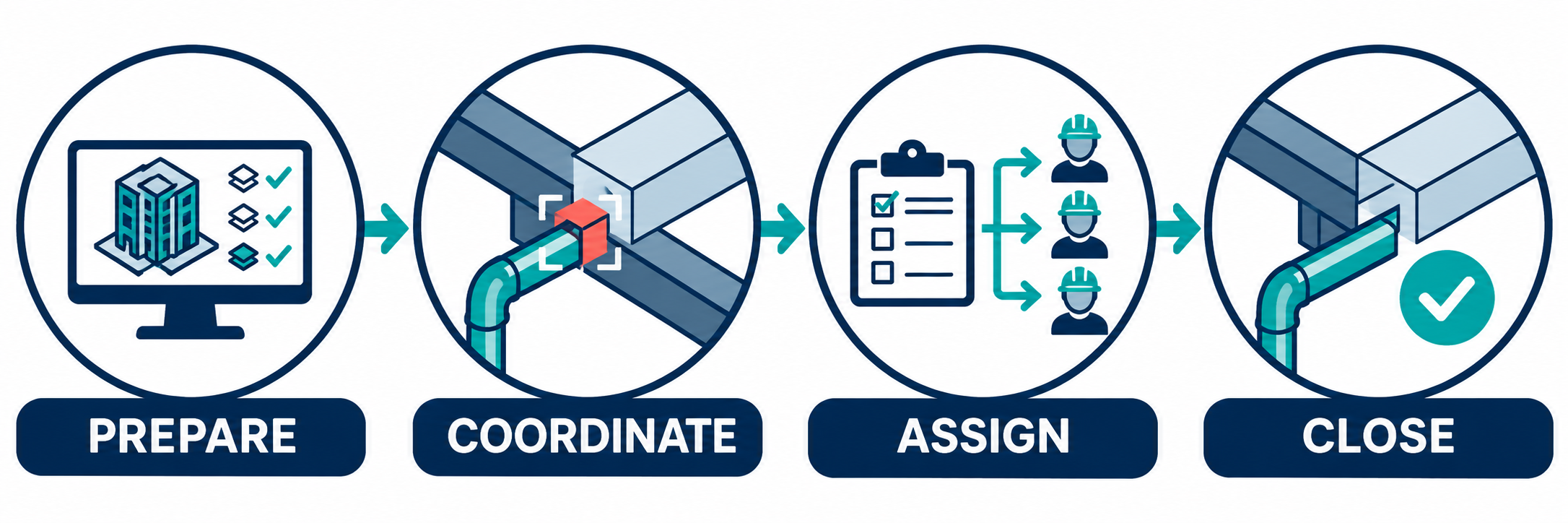
Source checked 28 November 2026: Autodesk: Review and Respond to Issues.